
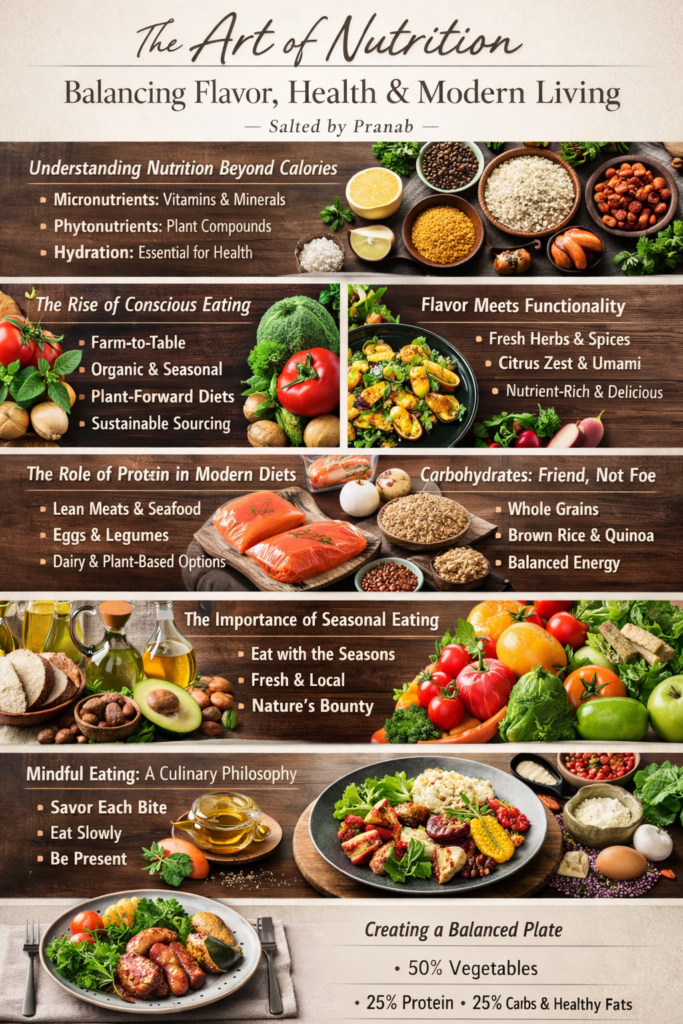
The Art of Nutrition: Balancing Flavor, Health & Modern Living
In today’s fast-paced world, nutrition is often reduced to numbers—calories, macros, and dietary restrictions. But true nutrition goes far beyond counting calories. It is an art form, a philosophy, and a lifestyle that blends flavor, nourishment, and balance. As culinary professionals and food enthusiasts, we must understand that food is not just fuel—it is an experience that shapes our health, culture, and well-being.
This blog explores how nutrition can be both indulgent and wholesome, proving that healthy eating does not mean compromising on taste or luxury.
Understanding Nutrition Beyond Calories
Nutrition is the science of how food affects the body, but it is also deeply personal. Each ingredient we use contributes to our overall health—whether it’s proteins that build muscle, carbohydrates that provide energy, or fats that support brain function.
However, modern nutrition is not just about macronutrients. It also involves:
- Micronutrients like vitamins and minerals
- Phytonutrients from plants that boost immunity
- Hydration, which is often overlooked but essential
A well-balanced plate is not about restriction—it is about harmony. The goal is to create meals that nourish the body while satisfying the senses.
The Rise of Conscious Eating
In recent years, there has been a shift towards conscious eating. People are becoming more aware of what they consume, where it comes from, and how it affects both their bodies and the planet.
Key trends include:
- Farm-to-table dining
- Organic and seasonal ingredients
- Plant-forward diets
- Sustainable sourcing
This movement is not about eliminating foods but about making informed choices. It encourages us to respect ingredients, reduce waste, and embrace natural flavors.
Flavor Meets Functionality
One of the biggest myths about healthy food is that it is bland or boring. In reality, nutrition and flavor go hand in hand when approached creatively.
Ingredients such as:
- Fresh herbs
- Citrus zest
- Spices like turmeric, cumin, and paprika
- Natural umami sources like mushrooms and aged cheeses
…can elevate simple dishes into extraordinary experiences.
For example, a simple grilled vegetable dish can be transformed with olive oil, garlic, herbs, and a touch of lemon. The result is a dish that is both nutritious and deeply satisfying.
The Role of Protein in Modern Diets
Protein has become a focal point in contemporary nutrition—and for good reason. It plays a vital role in muscle repair, metabolism, and overall body function.
Sources of high-quality protein include:
- Lean meats and poultry
- Fish and seafood
- Eggs
- Legumes and lentils
- Dairy and plant-based alternatives
For chefs and home cooks alike, the challenge is to incorporate protein in ways that are both innovative and balanced. Think beyond grilled chicken—explore global cuisines that celebrate protein in diverse and flavorful ways.
Carbohydrates: Friend, Not Foe
Carbohydrates often get a bad reputation, but they are essential for energy. The key lies in choosing the right type of carbs.
Complex carbohydrates, such as:
- Whole grains
- Brown rice
- Quinoa
- Oats
…provide sustained energy and are rich in fiber.
On the other hand, refined carbs can lead to energy spikes and crashes. The goal is not to eliminate carbs but to select high-quality sources and balance them with proteins and fats.
Healthy Fats: The Secret to Satisfaction
Fats are an essential part of a balanced diet. They support brain health, hormone production, and nutrient absorption.
Healthy fat sources include:
- Olive oil
- Nuts and seeds
- Avocados
- Fatty fish like salmon
In culinary applications, fats also play a crucial role in flavor and texture. A drizzle of extra virgin olive oil or a handful of toasted nuts can transform a dish into something luxurious and satisfying.
The Importance of Seasonal Eating
Seasonal eating is one of the simplest ways to improve nutrition and flavor. Ingredients that are in season are fresher, more nutrient-dense, and often more affordable.
For example:
- Summer offers vibrant fruits and light vegetables
- Winter brings hearty greens and root vegetables
- Monsoon calls for warming spices and comforting dishes
Cooking with the seasons not only enhances taste but also connects us to nature’s rhythm.
Hydration: The Overlooked Essential
While food often takes center stage, hydration is equally important. Water plays a critical role in digestion, circulation, and temperature regulation.
In addition to plain water, hydration can come from:
- Herbal teas
- Fresh fruit-infused water
- Broths and soups
Staying hydrated improves energy levels, skin health, and overall well-being.
Mindful Eating: A Culinary Philosophy
Mindful eating is about being present during meals—appreciating flavors, textures, and aromas. It encourages slower eating, better digestion, and a deeper connection with food.
Tips for mindful eating:
- Avoid distractions while eating
- Chew slowly and savor each bite
- Listen to your body’s hunger cues
For chefs, this philosophy translates into creating dishes that engage all the senses, offering not just nourishment but a memorable experience.
Nutrition in Fine Dining
In the world of fine dining, nutrition is no longer an afterthought. Modern gastronomy embraces the idea that luxury and health can coexist.
Today’s chefs are:
- Reducing excessive fats and sugars
- Highlighting natural flavors
- Using innovative cooking techniques to preserve nutrients
Dishes are crafted with precision, ensuring that they are both visually stunning and nutritionally balanced.
Creating a Balanced Plate
A balanced meal should include:
- A source of protein
- Healthy carbohydrates
- Beneficial fats
- Plenty of vegetables
A simple formula:
50% vegetables + 25% protein + 25% carbohydrates + healthy fats
This approach ensures that meals are satisfying, nourishing, and sustainable in the long term.
Conclusion: Nutrition as a Lifestyle
Nutrition is not about strict diets or temporary changes—it is a lifelong journey. It is about making choices that support your health while still enjoying the pleasures of food.
As culinary professionals, we have the power to redefine how people perceive healthy eating. By combining technique, creativity, and knowledge, we can create dishes that are both indulgent and nourishing.
At Salted by Pranab, the philosophy is simple:
Celebrate food in its purest form—where flavor meets wellness, and every dish tells a story of balance and excellence.
